
Detention Center Release Routes
The Claiborne County Sheriff operates the county detention function and keeps the jail docket. That docket is the first record to consult after a Claiborne County Detention Center release. It can distinguish a bond or court-authorized community release from a transfer that merely ends county custody. The court record answers what happened in the case. It does not, on its own, establish the moment detention staff completed the physical release.
A person may leave Claiborne County Detention Center on bond, recognizance, a court order, time served, or completion of a local sentence. A penitentiary receipt points instead to MDOC custody. A receiving-agency entry may identify another county, the U.S. Marshals Service, or ICE. Death is an end to confinement but not a community release. Escape is an unauthorized absence and must never be grouped with lawful releases.
| Docket outcome | Next record |
|---|---|
| Bond or court release | Filed court order and later case docket |
| Transfer to MDOC | MDOC inmate search and state record |
| Transfer to another agency | Receiving custodian's locator or record |
| Local sentence completed | Judgment plus sheriff discharge entry |
Confirm Detention Center Releases
No official current roster or recent-release archive was found for Claiborne County Detention Center. The correct route is a focused request for the existing jail-docket entry. Use a full name with a date of birth, approximate booking date, case number, or booking number when known. A durable identifier helps separate people with similar names.
- Call the Claiborne County Sheriff and ask for the current procedure to obtain the jail-docket release or discharge entry.
- Identify one booking and ask for the date, manner, authority, warrant, or receiving-agency receipt recorded for its end.
- Read the result literally. A transfer means custody continued elsewhere.
- Check the court docket for the bond order, dismissal, judgment, sentence, or later action tied to the same case.
- Follow MDOC, BOP, ICE, or another county only when the docket or case facts identify that route.
The broader Claiborne County released inmate search explains how the county record fits with state, federal, court, and VINE sources. A person who simply disappears from a current-custody view has not been proven released. The sheriff entry supplies the missing event type.
Detention Center Release Records
The official sheriff page publishes a mailing address, telephone, and fax. It does not document a physical jail entrance, public release desk, walk-in hours, records form, dedicated email, fee schedule, or release schedule. Call before traveling and ask staff to confirm the correct custodian, accepted request method, inspection site, hours, and any estimated charge.
P.O. Box 427
Port Gibson, MS 39150
Phone: 601-437-5161
Fax: 601-437-3830
Official sheriff page
A useful request seeks an existing record rather than asking staff to create an explanation. Name the booking, request the release or discharge entry, and ask for the release authority, warrant, or receiving-agency receipt. If a booking photograph is needed, request it separately because the official source does not state that a photo is part of the public docket.
About Claiborne County Detention
Claiborne County Detention Center is a local detention facility used for pretrial confinement, local sentences, and transfers to other custodians. The sheriff is the county jailer. No reliable official capacity, release-hours schedule, visitation detail, public waiting point, property-pickup policy, roster, mobile app, or photo rule was located. Those details should not be borrowed from a commercial directory or a similarly named county.
Custody terms matter. A pretrial detainee may leave under bond while the case remains pending. A sentenced person may serve local time or be transferred into the Mississippi Department of Corrections. Temporary court movement, hospital transport, and furlough are not final releases. The record should name the event, its authority, and the next custodian when one exists.
- Community release
- County custody ends and no receiving custodian is identified.
- Transfer
- County custody ends because another agency takes custody.
- Discharge entry
- The jail-docket line stating how the identified confinement ended.
- Detainer
- A request or basis for another authority to assume custody.
Claiborne Release Chain of Custody
Mississippi Code Section 19-25-63 gives Claiborne County an unusually strong release-verification route. The sheriff's jail docket must include identity, the process that brought the person in, the issuing authority, reception and arrest or commitment dates, cause, duration, how the person was released or discharged, and the release warrant or penitentiary officer's receipt. This goes well beyond a live roster.
The receipt is especially useful when someone leaves Claiborne County Detention Center after sentencing. It can show that the person entered state custody rather than the community. The filed judgment then explains the sentence, while MDOC explains current location, time computation, supervision, or later discharge. Each record answers a different question.
The jail-docket statute is the source for these required fields. Ask for the responsive portions of the specific booking. Protected material may be withheld or redacted, but segregable public parts should be requested.
Note: A jail-docket receipt can establish transfer to a penitentiary even when no public county roster or release feed exists.
Official Claiborne Release Route
The official Claiborne County Sheriff page shows the contact-led route available to the public.
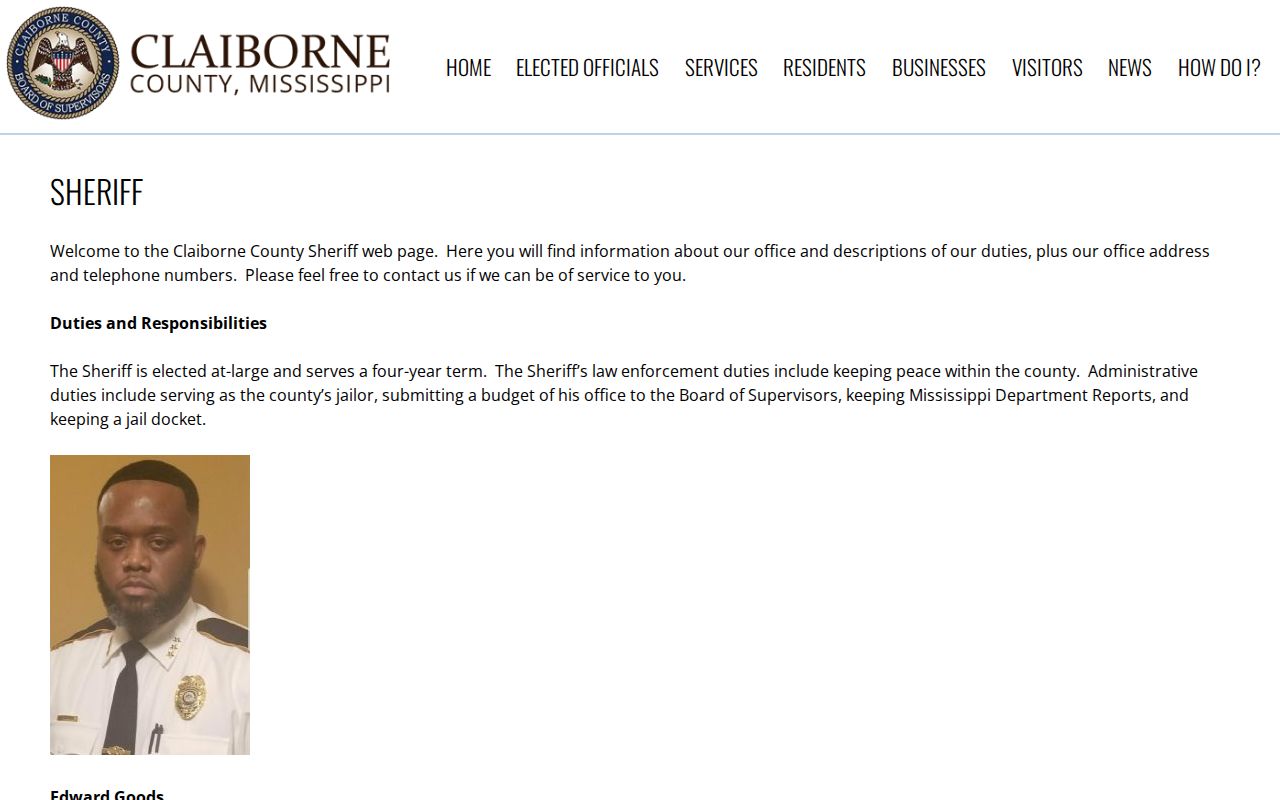
The capture supports use of the sheriff and statutory jail docket rather than an invented online release feed.
Claiborne Release Record Bundle
The strongest proof bundle starts with the sheriff's release line. Add the court order or judgment that authorized the outcome. When the person moved elsewhere, add the receiving custodian's record. This three-part approach separates physical custody, legal case status, and what happened after the county handoff.
Bond does not mean dismissal. A dismissal order may be entered before detention staff finish processing release. Time served should be matched to the judgment. An MDOC transfer should be matched to the state record. VINE may provide a useful event alert, but its data comes from a participating agency and should be confirmed with that agency.
Older records may no longer be visible online, yet the government record can remain subject to an approved retention schedule. Ask whether the exact series is held, archived, or transferred. Do not treat online absence as proof that the custody event never occurred.
For every Claiborne County Detention Center release check, preserve the source date, booking identifier, and exact docket wording. That small record trail prevents later confusion when a locator changes or a court enters another order.
Claiborne Detention Release Matching
A sound detention-center release check ties one person to one booking. Begin with the full legal name and add a date of birth, booking or case number, and approximate reception date when available. The jail-docket law requires identity and custody facts, but a common name can still pull the wrong entry. Ask the sheriff to identify the record by its maintained number rather than relying on a photograph or name alone.
Next, compare the authority on both ends of the confinement. The entry process may be a warrant, mittimus, arrest, or commitment. The exit should name the manner of release or discharge and the supporting warrant or receiving receipt. A bond record should be paired with the filed court order. A penitentiary receipt should be followed into MDOC. Another receiving agency should be checked through its own system. This creates a continuous Claiborne County custody timeline instead of an unsupported guess based on roster absence.
Conflicts should remain visible until the originating office resolves them. A court order can precede physical discharge. VINE may post after an agency update. A receiving system may show a later entry time. Record what each source calls the date, note when it was observed, and ask the source office to explain or correct its own field. Do not silently select the newest-looking date.
Older material may require an archive check because the county has no verified online release history. Ask whether the exact jail docket, booking file, photograph, or receipt remains with the sheriff or has moved to another custodian under the approved records schedule.